
Car Wrap Color Change Orange County: Costs & Guide
A car wrap color change Orange County vehicle owners request most often swaps factory paint for a vinyl finish in a matter of days, not weeks. Instead of committing to a permanent repaint, drivers can choose a bold new shade, a subtle satin finish, or a full chrome delete, then switch again later if their taste changes. This guide walks through what a color change wrap actually involves, how much it typically costs locally, and what separates a durable, bubble-free installation from one that fails within a year. Whether you drive a daily commuter or manage a commercial fleet, the right wrap job delivers both style and protection.
What Is a Car Wrap Color Change?
A car wrap color change is the process of covering a vehicle’s factory paint with a layer of vinyl film in a new color or finish, rather than repainting the body. The film is cut, heated, and pressed around every panel, mirror, and trim piece to create a seamless new exterior.
Unlike paint, a vinyl wrap sits on top of the clear coat and can be removed later without damaging the finish underneath, assuming the paint was healthy before installation. According to the overview of vehicle wraps on Wikipedia, professional-grade vinyl films typically last three to seven years depending on climate exposure and film quality. In Orange County’s sun-heavy climate, that lifespan depends heavily on using UV-resistant film and parking out of direct sunlight when possible.
Most local installers offer two main approaches: a full wrap covering the entire vehicle, or a partial wrap that targets specific panels, mirrors, or the roof for an accent look. For design inspiration, this collection of current wrap design trends shows popular finishes requested throughout the region.
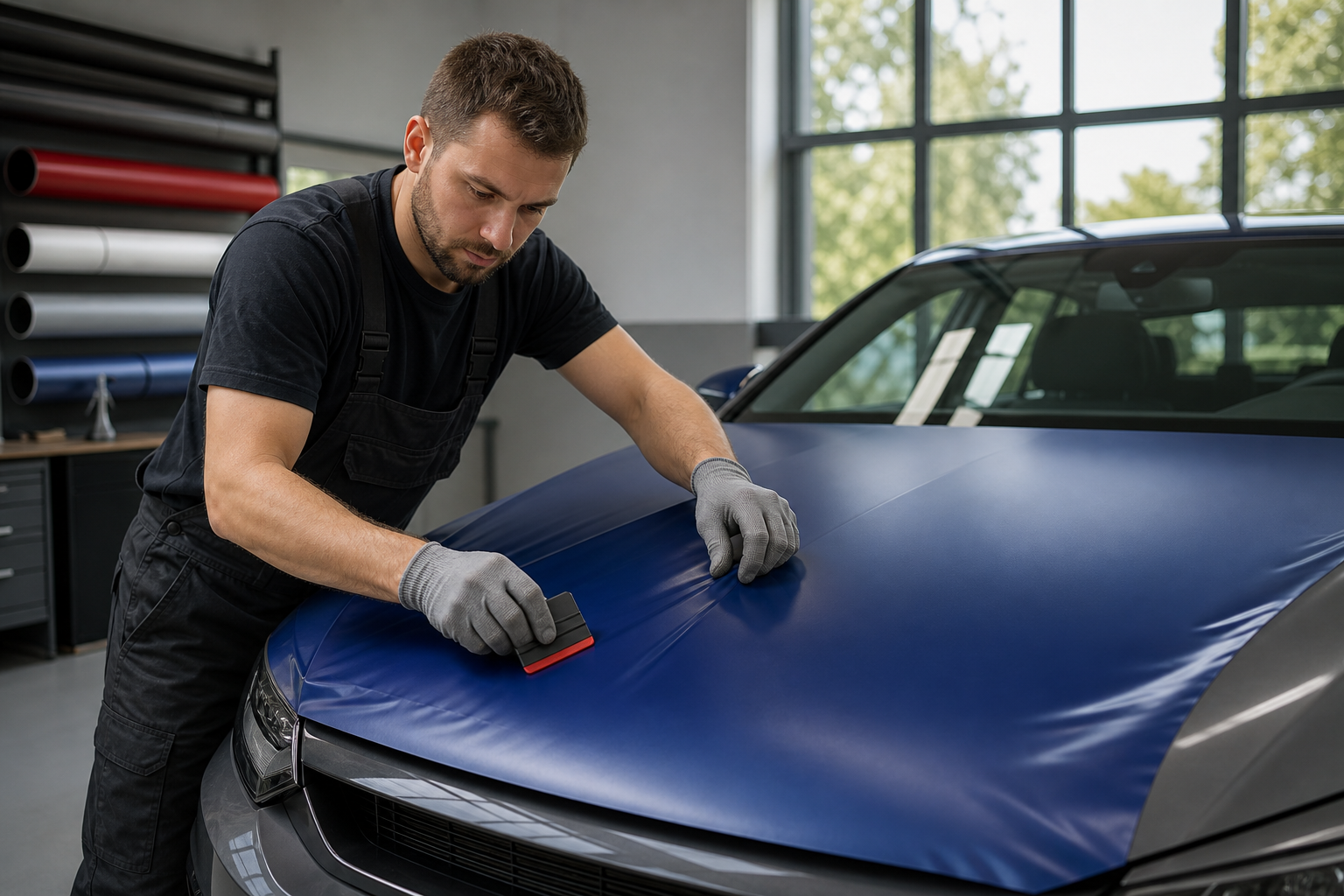
A careful, methodical application process is essential for a smooth car wrap color change Orange County drivers can rely on for years.
Car Wrap Color Change Orange County: What Drivers Should Know
Orange County’s coastal sun and salt air make vehicle protection just as important as style. A car wrap color change Orange County drivers invest in should factor in UV exposure, since prolonged sun can fade lower-quality vinyl within a year or two.
California law also requires reporting a vehicle color change to the Department of Motor Vehicles, even when the change comes from a wrap rather than paint. Checking current requirements on the California DMV website before your installation helps avoid registration headaches later.
Local driving conditions matter too. Stop-and-go traffic on major freeways, combined with frequent washes near the coast, puts extra stress on wrap edges. Consequently, choosing an installer familiar with local conditions, who seals edges properly, tends to produce longer-lasting results than a generic installation.
Why Choose a Color-Change Vinyl Wrap Over Paint?
Many drivers compare a color-change wrap to a traditional repaint before deciding. In general, a wrap costs less, takes less time, and protects the original paint underneath it.
| Factor | Vinyl Wrap | Paint Job |
|---|---|---|
| Typical cost | Lower | Higher |
| Install time | 2–5 days | 1–2 weeks |
| Reversible | Yes | No |
Furthermore, a vinyl wrap can be removed to reveal factory paint in nearly original condition, which matters for leased vehicles or cars drivers plan to sell. For a deeper look at how wraps compare to clear protective film, see this comparison of full wraps versus paint protection film.
How Much Does a Vehicle Color Change Wrap Cost?
Pricing for a car wrap color change Orange County shops quote depends on vehicle size, film brand, and finish complexity. Typical ranges look like this:
- Compact car full wrap: $2,500–$3,800
- Sedan or coupe full wrap: $3,000–$4,500
- SUV or truck full wrap: $4,000–$6,500
- Partial wrap (hood, roof, mirrors): $600–$1,800
- Chrome delete package: $300–$900
These ranges align with widely cited industry averages, though premium cast vinyl film can push costs toward the higher end. For an exact quote, browsing real project examples in this wrap design and pricing guide gives a clearer sense of what local installers typically charge for different complexity levels.
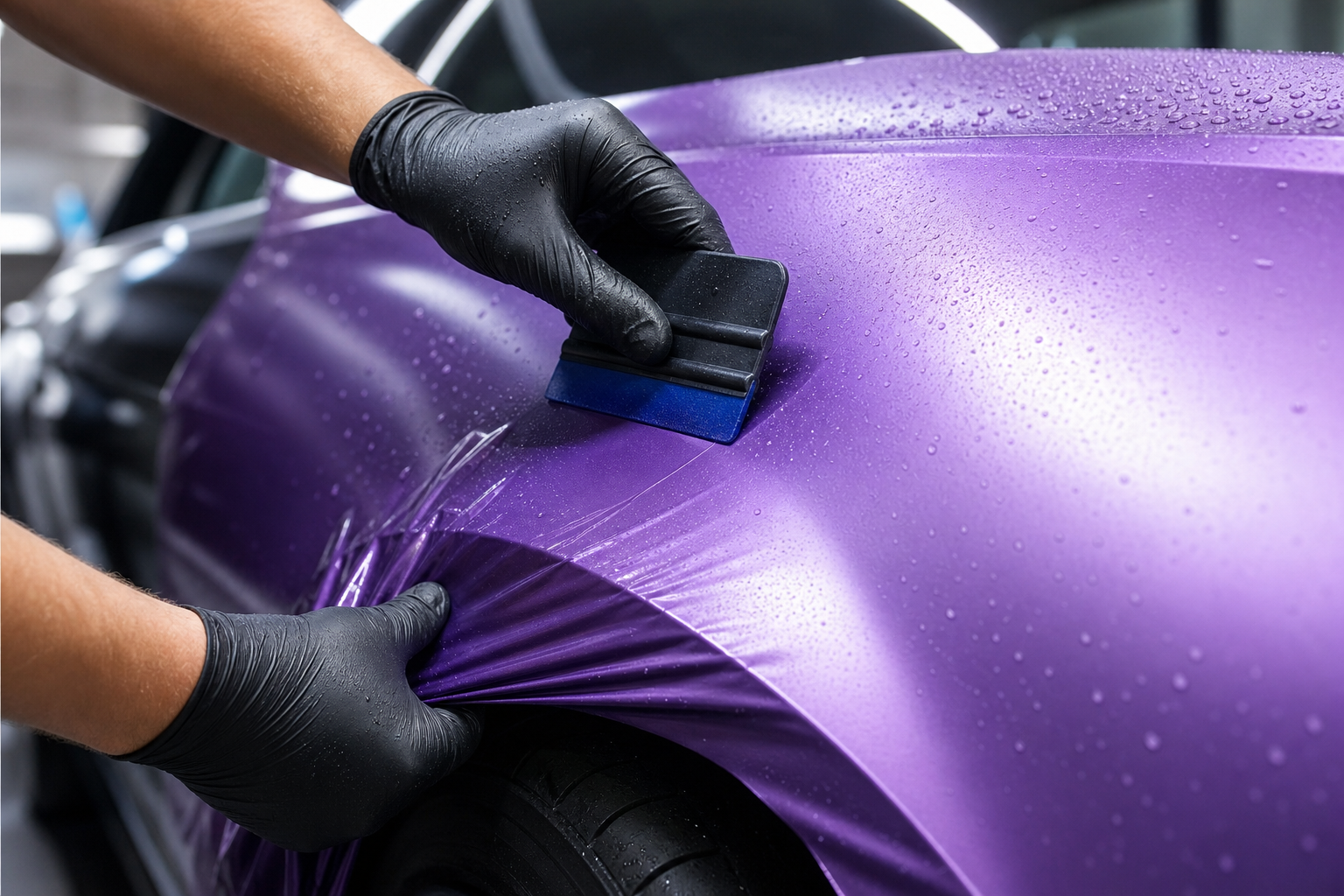
Edge sealing and careful squeegee work determine whether a wrap stays bubble-free for years.
The Color Change Wrap Process: Step by Step
A professional color change wrap follows a consistent sequence. Skipping any step often shortens the lifespan of the finished job.
- Discuss vehicle use, desired finish, and budget with an installer, then select a vinyl color and finish that matches your goals.
- Thoroughly wash and decontaminate the vehicle to remove dirt, wax, and residue that could trap air bubbles under the film.
- Inspect the surface for chips, rust, or dents that could affect adhesion, then repair any paint issues before wrapping begins.
- Remove mirrors, door handles, and trim pieces so edges can be wrapped cleanly instead of cut around obstacles.
- Apply vinyl panel by panel, using heat guns to stretch and mold the film around curves and body lines.
- Trim excess film, seal every edge to prevent lifting, and inspect the full vehicle for bubbles or misalignment.
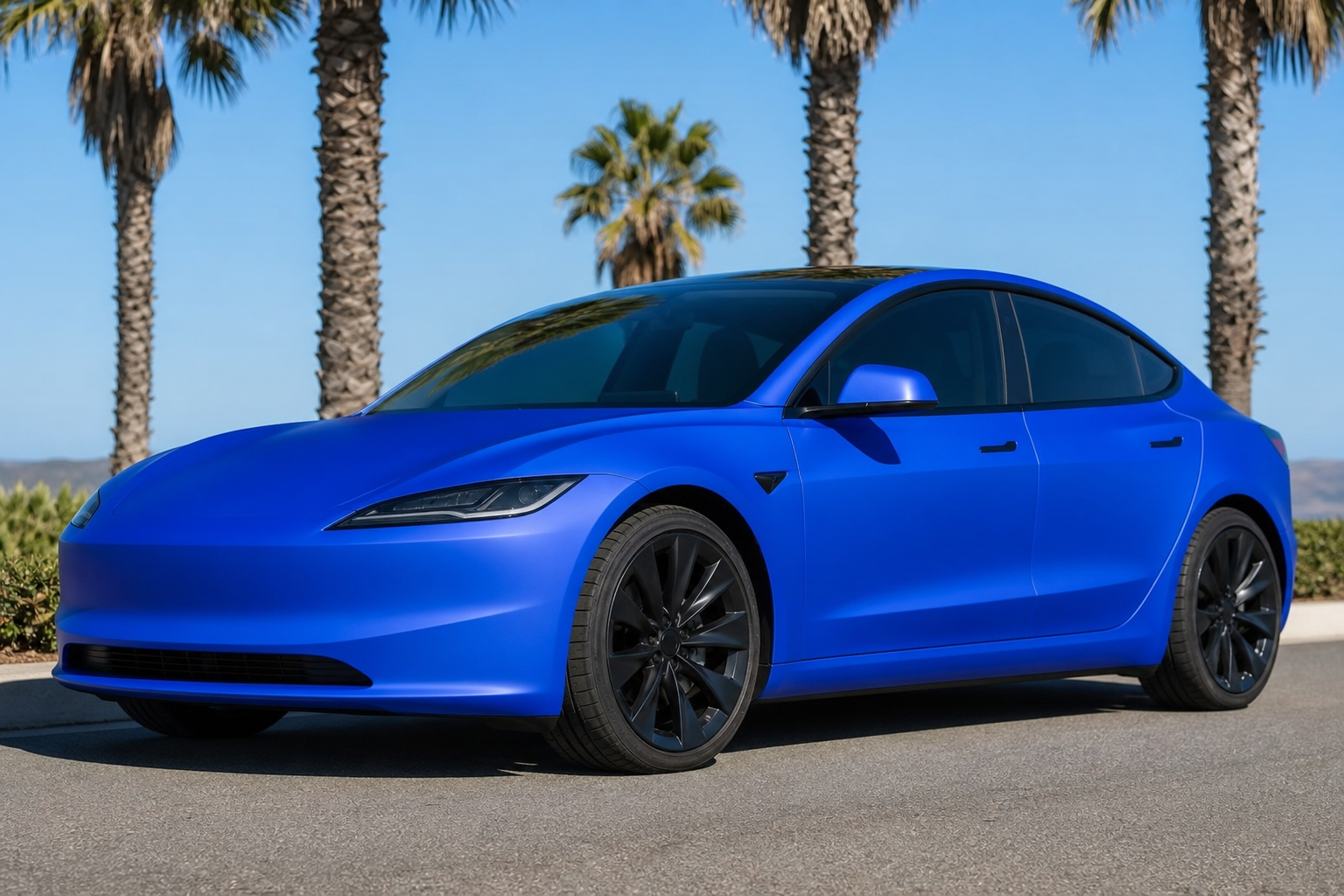
The finished result of a well-executed color change wrap under bright Orange County sunlight.
Choosing the Right Finish and Installer in Orange County
Beyond solid gloss colors, drivers can choose matte, satin, chrome, or color-shift finishes that change appearance depending on lighting angle. Each finish has different maintenance needs, so it helps to ask an installer how a specific finish holds up to daily driving.
Similarly, choosing the right installer matters as much as choosing the right film. Look for a visible portfolio, clear warranty terms, and experience with the exact brand of vinyl you want. This guide to finding top Orange County installers breaks down what to look for before booking. You can also browse recent project examples at OC Wraps for a sense of finish quality and available options.
Common Mistakes to Avoid With a Color Change Wrap
Above all, cutting corners on film quality or surface prep tends to cause the most problems. Common mistakes include choosing cheap film, skipping paint decontamination, and hiring an inexperienced installer to save a small amount upfront.
In particular, sun exposure plays a bigger role than many drivers expect. The EPA’s UV index resource illustrates how intense UV exposure can be in Southern California for much of the year, which is one reason low-grade vinyl fades faster here than in milder climates. Therefore, confirming UV-resistant film before signing off on a quote is a simple step that prevents regret later.
Frequently Asked Questions About Car Wrap Color Change Orange County
What is a car wrap color change?
A car wrap color change covers a vehicle’s factory paint with vinyl film in a new color or finish instead of repainting the body. It is reversible and typically installed over two to five days.
How much does a car wrap color change cost in Orange County?
A full car wrap color change Orange County shops quote usually ranges from $2,500 to $6,500 depending on vehicle size and film quality. Partial wraps and chrome delete packages cost significantly less.
How long does a color change wrap last?
Most professional-grade vinyl wraps last three to seven years with proper care. Lifespan depends on film quality, installation technique, and sun exposure in coastal climates like Orange County.
Is a car wrap color change reversible?
Yes, a vinyl wrap can be removed to reveal the original factory paint, assuming the paint was healthy before installation. This makes wraps popular for leased vehicles.
Do I need to notify the DMV after a color change wrap?
California requires drivers to report a vehicle color change, even when it comes from a wrap rather than paint. Checking current DMV requirements before installation helps avoid registration issues.
What’s the difference between a full wrap and a partial wrap?
A full wrap covers every exterior panel for a complete color change, while a partial wrap targets specific areas like the hood, roof, or mirrors. Partial wraps cost less but offer a smaller visual change.
How long does the installation process take?
A full color change wrap typically takes two to five days depending on vehicle complexity and design detail. Rushing the process often leads to bubbling or lifted edges later.
Can I wash my car after a color change wrap?
Yes, but hand washing with a soft cloth is recommended for the first week. Avoid automatic car washes with brushes, which can lift edges or scratch the vinyl surface.
Will a wrap damage my car’s factory paint?
A properly installed and removed wrap should not damage healthy factory paint. Problems usually occur when low-quality film is left on too long or removed incorrectly.
What finishes are available for a color change wrap?
Common finishes include gloss, matte, satin, chrome, and color-shift vinyl. Each finish reacts differently to light and requires slightly different care.
How do I choose an installer for a car wrap color change in Orange County?
Look for an installer with a visible portfolio, clear warranty terms, and experience with the specific film brand you want. Reviewing recent local projects is one of the best ways to judge installation quality.
What’s the difference between vinyl wrap and ceramic coating?
A vinyl wrap changes the vehicle’s color and sits as a removable film, while ceramic coating is a clear liquid protectant applied directly over paint or film. They serve different purposes and are sometimes combined.
Can commercial fleet vehicles get a color change wrap?
Yes, fleet vehicles frequently use color change wraps combined with branding graphics for a consistent, professional appearance. This approach is often more cost-effective than repainting an entire fleet.
What common mistakes should I avoid with a color change wrap?
Common mistakes include choosing cheap film, skipping paint decontamination, and hiring an inexperienced installer. These shortcuts often lead to bubbling, fading, or premature peeling.
Is paint protection film better than a color change wrap?
Paint protection film is clear and focused on protecting paint, while a color change wrap is about changing appearance. Many Orange County drivers combine both for style and long-term protection.
Final Thoughts
In the end, a car wrap color change Orange County drivers can be proud of comes down to three things: quality film, careful installation, and an installer who understands local conditions. From selecting a finish to budgeting for the right size vehicle, each decision affects how long the wrap looks sharp on the road. Consequently, taking time to compare options, ask about warranties, and review real project examples pays off long after the install is finished.
