Partial Car Wraps Orange County: Cost & Design Guide
Partial car wraps Orange County drivers choose give a vehicle a fresh accent look without the cost of wrapping every panel. A partial wrap is a vinyl film application covering specific sections of a car, truck, or fleet vehicle, such as the hood, roof, mirrors, or lower rocker panels, rather than the entire body. For many Orange County vehicle owners, this approach delivers a noticeable style upgrade, a chrome delete accent, or light commercial branding while keeping labor and material costs well below a full wrap. This guide covers pricing, design options, the installation process, and what to expect from a professional partial wrap in Southern California.
Quick answer: A partial car wrap covers select panels of a vehicle, such as the roof, hood, or mirrors, instead of the full body. It costs less than a full wrap, takes only a few hours to install, and typically lasts three to five years with proper care.
What Are Partial Car Wraps Orange County Drivers Request Most?
Partial car wraps Orange County customers request most often include roof wraps, hood accents, mirror caps, chrome deletes, and lower rocker panel stripes. These sections are highly visible but relatively small, which makes them a practical starting point for drivers testing a color-change look before committing to a full wrap. In addition, chrome deletes have grown popular among owners who want to blackout trim pieces for a cleaner, more aggressive appearance.
According to vinyl film manufacturer guidance, partial applications typically cover between 20 and 40 percent of a vehicle’s exterior surface, which can reduce material and labor costs by roughly half compared with a full wrap. As a result, partial wraps have become an entry point for enthusiasts and a cost-conscious option for small businesses that still want a professional, branded appearance on their vehicles.
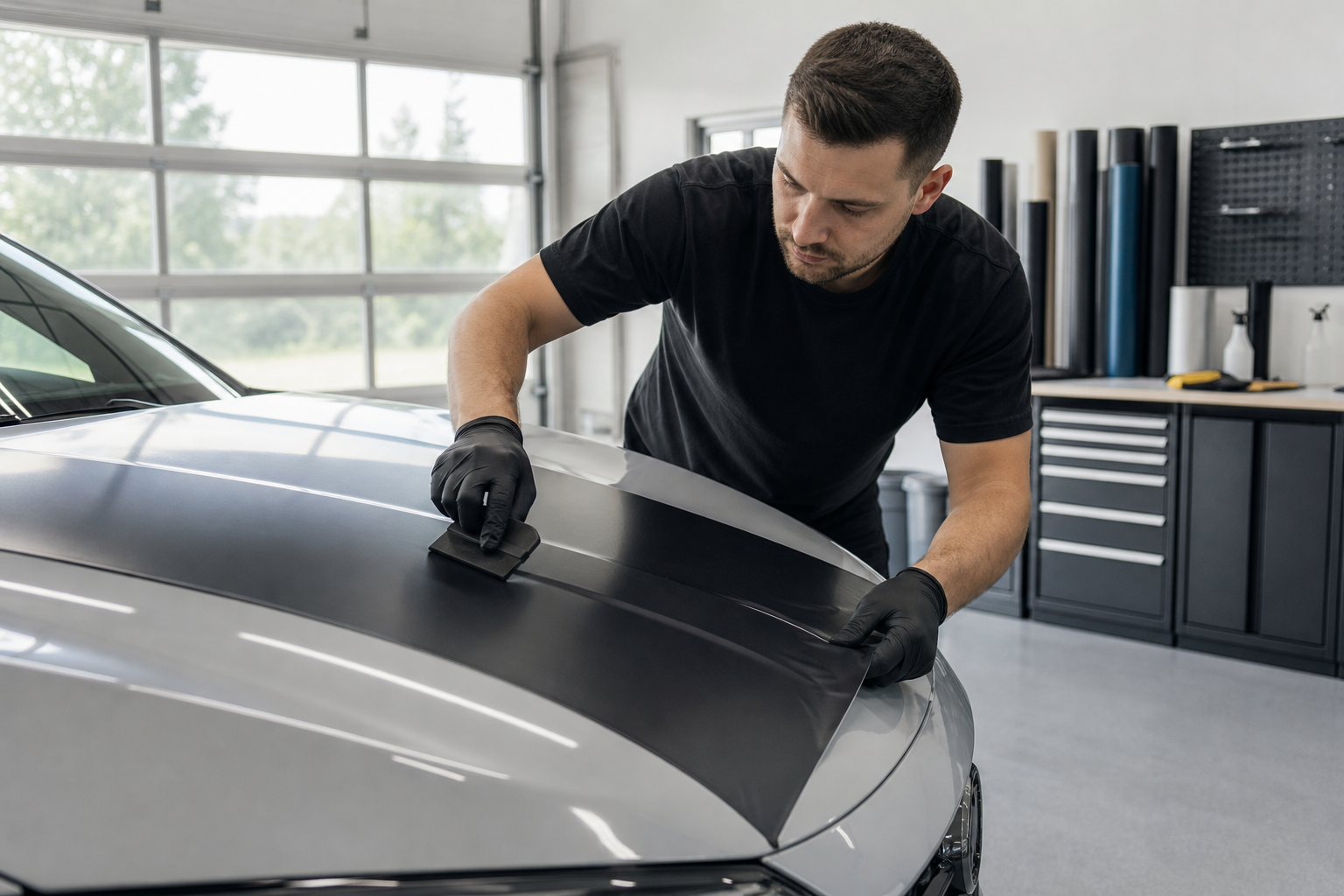
Precision installation is essential to keep partial car wraps Orange County residents choose free of bubbles and lifted edges.
Partial Wrap vs. Full Vehicle Wrap: Which Fits Your Budget?
Choosing between a partial vehicle wrap and a full wrap mostly comes down to budget, goals, and how dramatic a change you want. A full wrap transforms the entire vehicle and offers the most protection for original paint, since every wrapped panel is shielded from minor scratches and sun exposure. However, it requires significantly more vinyl and labor hours, which raises the overall cost.
In contrast, a partial wrap targets the areas that get the most visual attention, such as the roof or hood, while leaving the rest of the factory paint exposed. Consequently, it suits drivers who want a specific design statement, such as a contrasting roof or a branded door panel, without paying for full coverage. For a deeper breakdown of design directions, the custom wrap design guide for 2026 outlines current style trends in more detail.
How Much Do Partial Vehicle Wraps Cost in Orange County?
Partial vehicle wrap pricing in Orange County generally depends on panel count, vinyl grade, and design complexity. The table below outlines typical ranges local shops quote for common partial wrap packages.
| Partial Wrap Type | Typical Cost Range |
|---|---|
| Mirror caps and small accents | $150 – $400 |
| Roof wrap | $300 – $700 |
| Hood or chrome delete package | $400 – $900 |
| Multi-panel accent or fleet logo set | $800 – $1,800 |
Therefore, most partial wraps land well under the price of a full vehicle wrap, which often ranges from $2,500 to $5,500 depending on the vehicle size. For a full pricing breakdown across wrap categories, see the custom wrap pricing guide.
Popular Partial Wrap Styles and Design Ideas
Design preferences for partial wraps vary widely, but a few styles consistently come up in consultations. Two-tone accents, racing stripes, matte roof conversions, and satin chrome deletes remain top requests among Orange County drivers. Meanwhile, businesses tend to favor lower-panel branding wraps that keep the upper body clean while displaying a logo at eye level on sedans, vans, or trucks.
In particular, color combinations that contrast with the factory paint, such as a gloss black roof on a white car, create a sharp visual effect without the full commitment of a color-change wrap. For additional inspiration and current trend examples, browse the design ideas guide before your consultation.
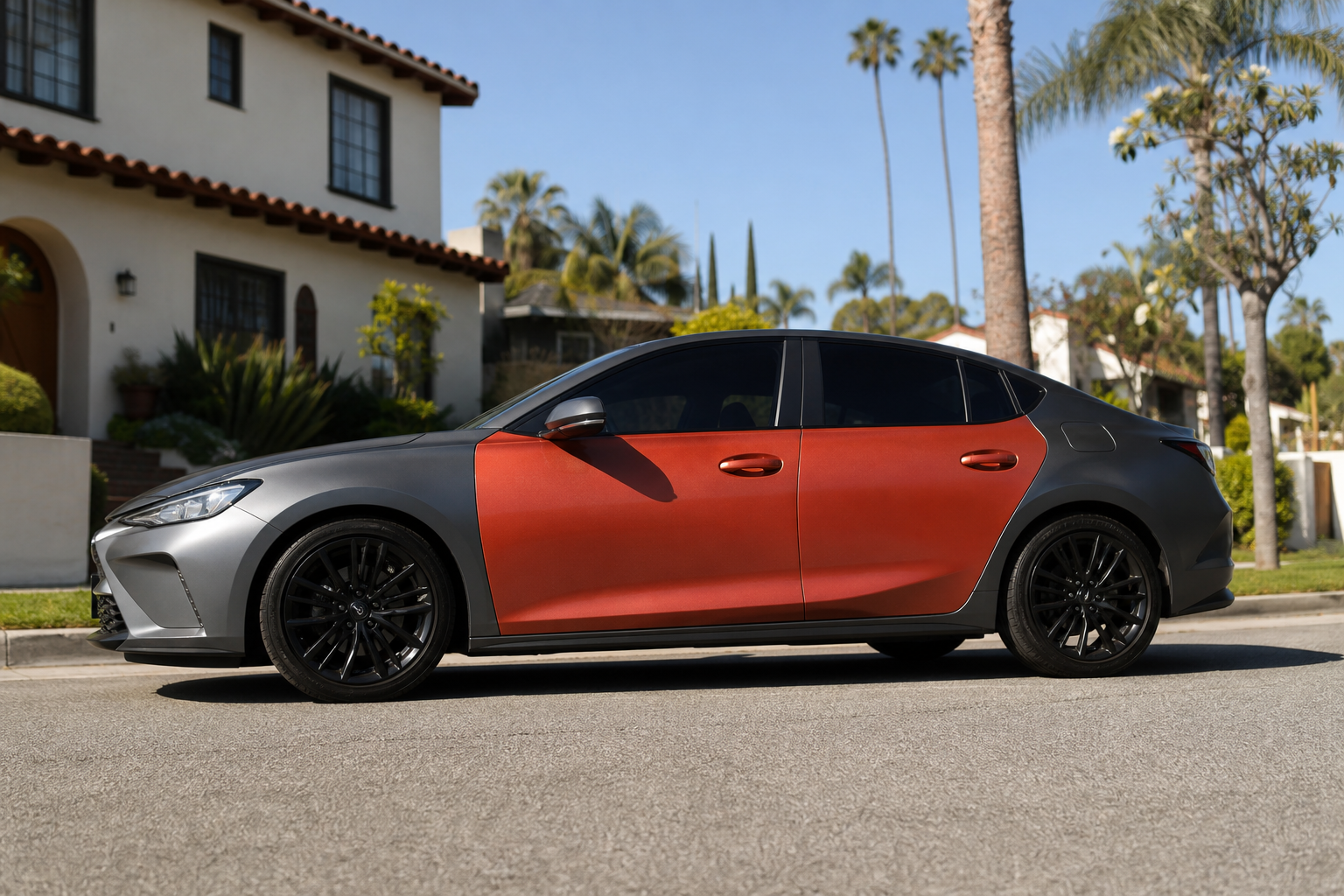
A contrasting accent panel is one of the most requested partial wrap styles in Orange County.
Step-by-Step: How Partial Wraps Get Installed
Understanding the installation process helps set expectations for turnaround time and finished quality. Below is the typical sequence a professional shop follows.
- Schedule a consultation and vehicle inspection. An installer inspects the paint condition, measures the panels you want wrapped, and discusses color or finish options before confirming a final partial wrap quote.
- Wash and decontaminate the surface. Technicians hand-wash the vehicle, remove wax or grease with a solvent wipe, and dry every panel completely so the vinyl adhesive bonds properly without trapping dirt.
- Measure, cut, and pre-fit the vinyl panels. The chosen film is measured against the vehicle’s exact panel dimensions, cut with precision blades, and dry-fitted to confirm alignment before any adhesive touches the paint.
- Apply heat and squeegee the film into place. Installers use a heat gun to soften the vinyl around curves and body lines while squeegeeing from the center outward to push out air and prevent bubbles.
- Trim edges, seal seams, and perform a final quality check. Excess material is trimmed along panel edges, seams are sealed to resist lifting, and the entire wrap is inspected under bright light for bubbles, debris, or misalignment.
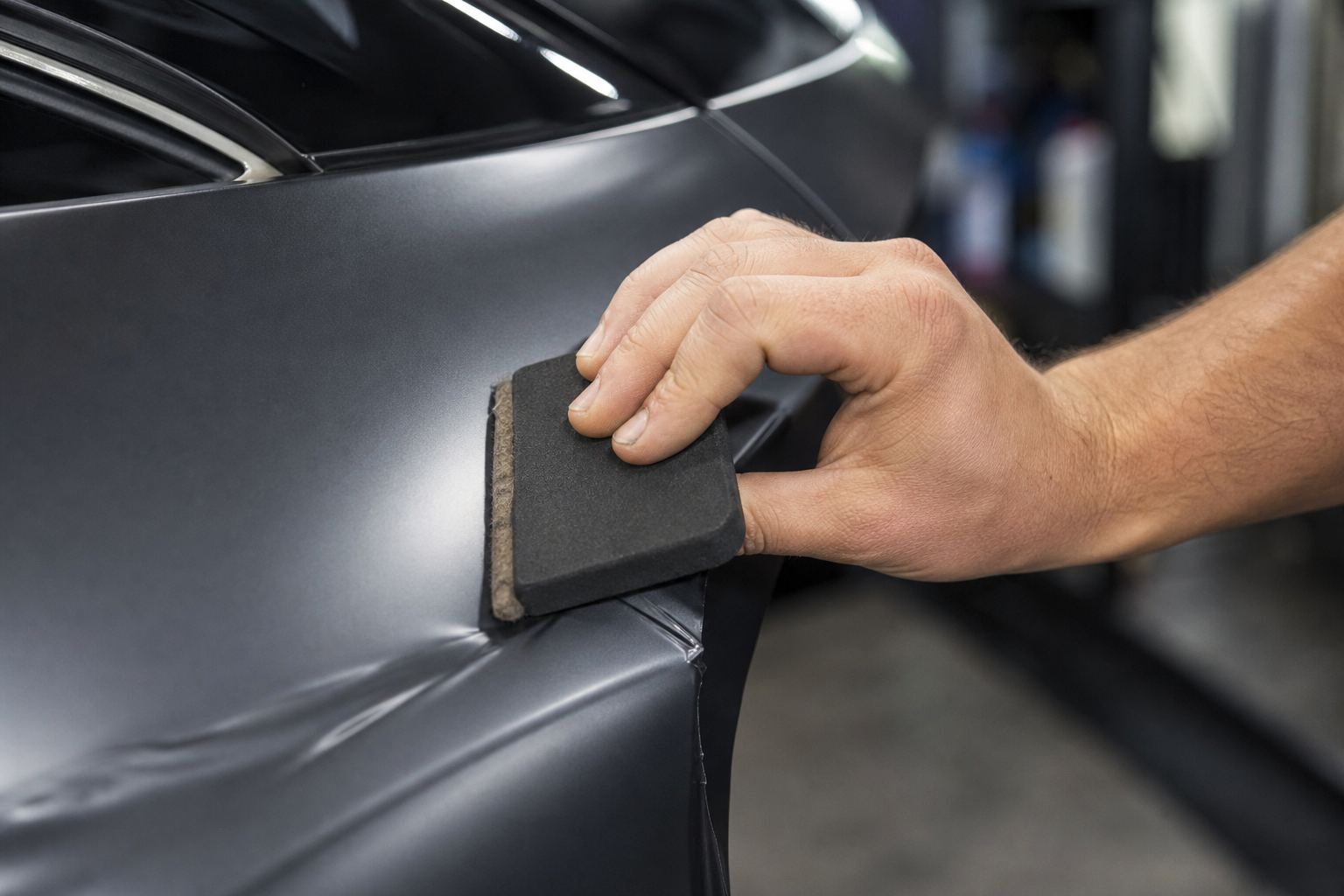
Careful edge sealing during installation helps a partial wrap resist lifting over time.
Choosing a Shop for Partial Car Wraps Near You
Not every installer handles partial wraps with the same level of precision as full-body projects, so it helps to check experience specifically with accent panels and edge work. A shop that also offers paint protection film and window tinting, similar to the services detailed on ocwraps.com, often has the material knowledge needed to recommend the right vinyl grade for Southern California sun exposure.
Furthermore, it is worth reviewing recent installation photos and asking about warranty terms before booking. If you are still comparing local options, the guide on finding the best place for car wraps in Orange County and the resource on locating reliable car wraps near you both walk through what to look for in a qualified installer.
How Long Do Partial Wraps Last?
Most quality partial wraps last between three and five years when installed correctly and maintained with regular hand washing. However, Orange County’s year-round sun exposure can accelerate fading on lower-grade vinyl, so choosing a reputable cast film, as described in general terms on Wikipedia’s vehicle wrap overview, tends to hold color longer under UV exposure.
Similarly, pairing a partial wrap with a protective film layer on exposed paint, a concept explained further on Wikipedia’s paint protection film page, can extend the overall appearance of the vehicle. Additionally, California vehicle owners making significant exterior color changes should check current reporting requirements through the California DMV, since large-scale color modifications may need to be documented.
Frequently Asked Questions About Partial Car Wraps Orange County
What are partial car wraps?
Partial car wraps are vinyl film applications covering select sections of a vehicle, such as the hood, roof, mirrors, or rocker panels, instead of the entire body. They deliver a style accent or branding element at a lower cost than a full wrap.
How long does it take to install a partial car wrap?
Most partial wraps take between two and five hours depending on the panels involved and the complexity of the design. A simple roof or mirror wrap can often be finished in a single appointment.
Why choose a partial wrap instead of a full wrap?
A partial wrap costs significantly less than a full wrap because it uses less material and labor while still changing a vehicle’s visual character. It also works well for drivers who want a specific accent rather than a complete color change.
Is a partial wrap cheaper than paint protection film?
Partial wraps and paint protection film serve different purposes, so pricing varies by coverage area and material grade. Wraps focus on appearance while protection film focuses on guarding paint from chips, and many shops offer both on the same panels.
How much do partial car wraps cost in Orange County?
Partial car wraps Orange County shops typically price between 400 and 1,800 dollars depending on panel count, vinyl grade, and design complexity. Roof wraps and mirror caps sit at the lower end, while multi-panel accent packages cost more.
How long do partial wraps last before fading?
A quality partial wrap typically lasts three to five years with proper care, though Southern California sun exposure can shorten that slightly. Parking in shade and regular hand washing help the vinyl hold its color longer.
What mistakes should I avoid with a partial wrap?
Common mistakes include skipping a proper paint decontamination step, choosing a shop without installation experience, and ignoring panel edges where lifting starts first. These issues usually shorten the wrap’s lifespan and affect its finished look.
How do I maintain a partial car wrap?
Hand wash the wrapped panels with mild soap, avoid automatic brush washes, and keep sharp or abrasive objects away from the vinyl edges. Routine care like this keeps the film looking new for years.
Can a partial wrap be removed without damaging paint?
Yes, a correctly installed partial wrap can be removed cleanly when the underlying paint was in good condition before installation. Heat is used to soften the adhesive so the vinyl lifts away without pulling clear coat.
Do I need to register a partial wrap with the DMV?
California requires vehicle owners to report a color change only when the modification covers a large portion of the exterior. Most partial wraps covering smaller accent panels do not trigger this requirement, but drivers should confirm with the DMV if unsure.
What vinyl material is best for partial wraps?
Cast vinyl film is generally preferred for partial wraps because it conforms tightly around curves and resists shrinking over time. Calendared vinyl is a lower-cost option that works fine on flatter panels like hoods or roofs.
Can partial wraps be used for commercial fleet branding?
Yes, many businesses use partial wraps on lower panels or rear doors to display logos and contact information without covering the entire vehicle. This keeps branding costs down while still improving visibility on the road.
What’s the difference between a partial wrap and a decal?
A partial wrap is a continuous film applied over a full panel or section, while a decal is typically a smaller printed graphic applied on top of existing paint or film. Wraps generally offer a cleaner, more integrated look.
Will a partial wrap hold up in Southern California heat?
Quality vinyl films are engineered to withstand high temperatures and UV exposure common in Orange County. Proper installation technique, including correct heat application during fitting, also helps the film stay adhered through hot summers.
How do I find a reliable installer for partial car wraps Orange County?
Look for a shop with a visible installation portfolio, clear pricing, and experience with both color-change vinyl and paint protection film. Reading recent customer feedback and asking about warranty coverage also helps confirm reliability, and you can start by reviewing work samples at ocwraps.com.
In summary, partial car wraps Orange County drivers choose offer a practical middle ground between doing nothing and committing to a full vehicle wrap. They cost less, install faster, and still deliver a noticeable change through roof accents, chrome deletes, color panels, or fleet branding. Whether you are refreshing a personal vehicle or adding consistent branding to a business fleet, working with an experienced installer helps ensure the finished wrap stays bubble-free and holds up through daily Southern California driving.
